Wendy Berger · 25 November 2026
Gorsehill's Rare Orchid Finds Prompt University Teams to Test Soil Microbe Interactions Across Comparable Upland Sites
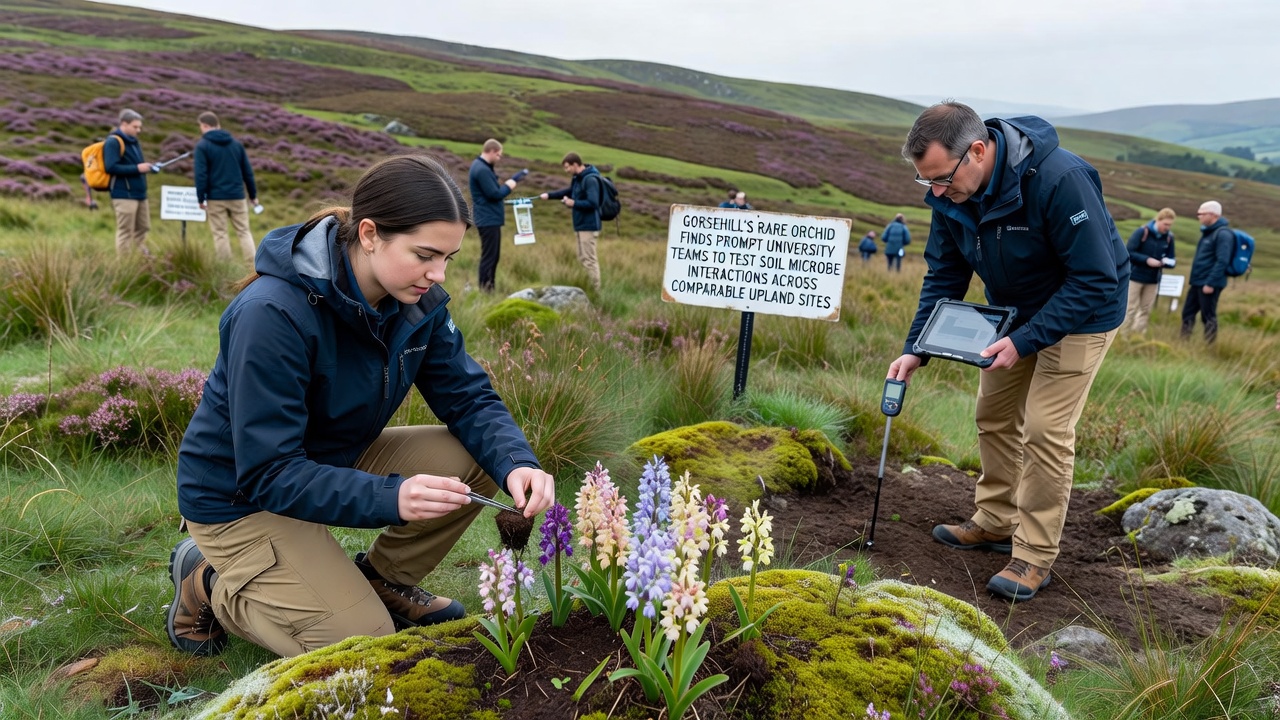
Teams from several universities launched fieldwork programs in November 2026 after reports confirmed the presence of uncommon orchid species on the slopes of Gorsehill, and these discoveries led researchers to examine soil microbe communities in matching upland environments across multiple regions. The orchids, documented through systematic surveys by local botanists, appear in specific microhabitats where soil chemistry and microbial activity create favorable conditions for germination and growth.
Discovery Details and Initial Surveys
Survey crews first noted the orchids during routine vegetation mapping conducted through the summer and early autumn of 2026, while follow-up visits in November confirmed additional clusters at higher elevations along the hill's western flanks. Soil cores extracted from these sites revealed distinct microbial profiles that differ from those found in lower-lying grasslands, and the patterns prompted collaboration between plant ecologists and microbiologists from institutions in the UK, Australia and Canada. Researchers began comparing these profiles with data gathered from similar elevations in the Scottish Highlands and the Australian Alps, where comparable orchid populations have been monitored for over a decade.
Soil Microbe Sampling Across Upland Sites
University groups established paired sampling grids at Gorsehill and three additional upland locations selected for matching geology, rainfall patterns and elevation ranges, and each grid included both orchid-present and orchid-absent plots. DNA sequencing of microbial communities showed elevated levels of certain mycorrhizal fungi in the orchid zones, yet the same fungi occurred at lower abundance in adjacent plots lacking the plants. Data from the Australian sites, coordinated through CSIRO research stations, indicated parallel associations between specific bacterial taxa and orchid presence, which allowed the teams to test whether these relationships hold across continents. Portable sequencing units deployed in the field during November 2026 generated preliminary results within hours of sample collection, and the speed of analysis helped refine the next round of sampling locations on the same visit.
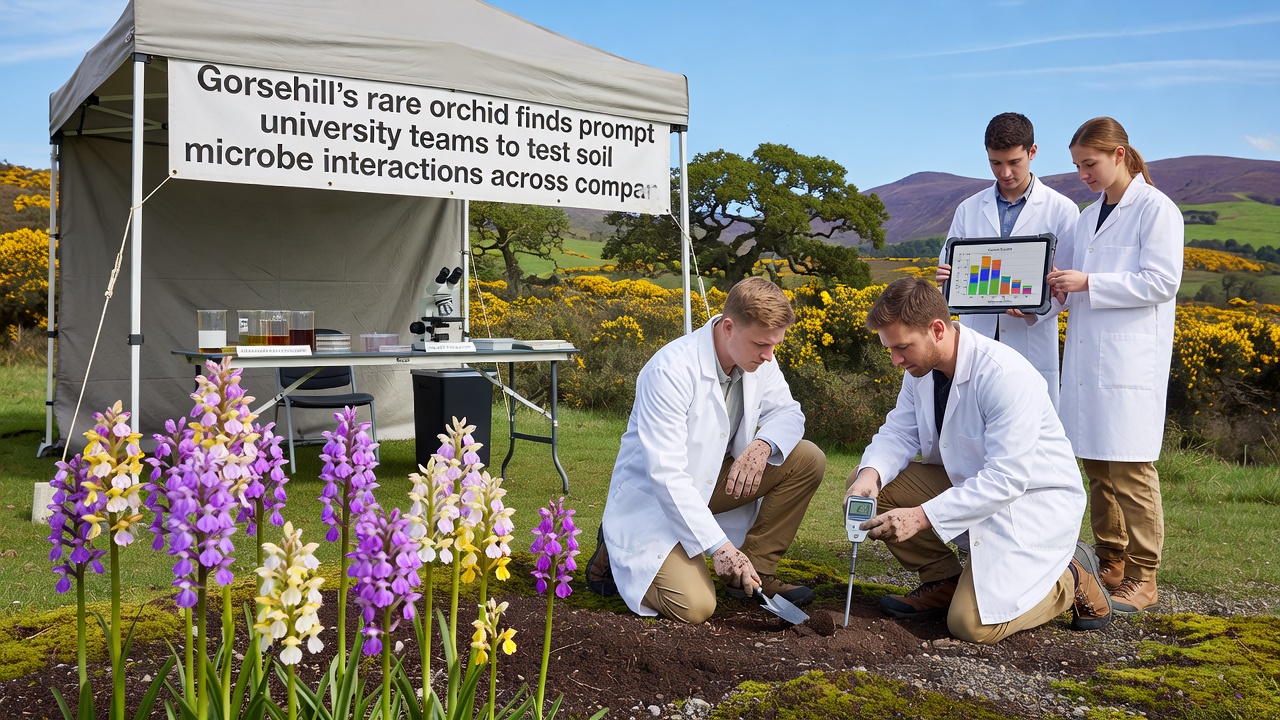
Weather stations already operating on Gorsehill slopes supplied temperature and moisture readings that researchers cross-referenced with microbial activity measurements, and the combined datasets helped isolate variables most strongly linked to orchid distribution. Similar instrumentation at the Canadian sites provided continuous records that researchers used to adjust models predicting how shifts in winter precipitation might affect microbial communities in coming seasons.
Comparative Data Analysis and Early Findings
Statistical comparisons of microbial diversity indices across the four upland regions revealed consistent enrichment of certain functional genes associated with nutrient cycling in orchid-supporting soils, while plots without orchids showed greater variability in community composition from one sampling event to the next. Researchers noted that November conditions, characterized by cooler soil temperatures and increased moisture, appeared to stabilize the microbial populations under study, which in turn allowed clearer detection of the associations tied to orchid presence. Ongoing work includes transplant experiments in controlled chambers where soil from Gorsehill is paired with orchid seeds from distant populations, and results from these trials are expected to clarify whether local microbial communities are necessary for successful establishment.
Additional upland locations in Norway and New Zealand have been added to the sampling network for 2027, and the expanded dataset will test whether the patterns observed so far generalize to a broader range of temperate and subalpine environments. Government environmental agencies in each participating country have supplied permits and baseline habitat data, which reduced the time required to secure access to comparable sites.
Broader Context for Upland Conservation Monitoring
Monitoring programs already tracking changes in upland vegetation now incorporate soil sampling protocols developed during the Gorsehill project, and the integrated approach allows simultaneous assessment of above-ground and below-ground components of the ecosystem. Records from the Australian Department of Climate Change, Energy, the Environment and Water show that similar orchid-microbe relationships have informed habitat restoration guidelines in protected areas since 2018, and the current cross-site study aims to produce comparable guidance for UK upland managers. Equipment shared among the university teams includes standardized soil corers and sequencing kits that ensure data compatibility, while open-access repositories established for the project allow other researchers to access raw sequence files and metadata without delay.
Conclusion
The coordinated sampling effort that began in November 2026 continues to generate datasets that link orchid occurrence with specific microbial signatures across distant upland landscapes, and the findings are already shaping the design of future surveys in comparable habitats. As the teams compile results from additional regions, the combined evidence will clarify the extent to which soil microbe interactions determine the distribution of these rare plants and inform management decisions at both local and regional scales.